
More Than Just an Exam. A Qualification for Life
At Europolytech, we believe that language is a tool for action, not just a subject to study. That’s why we have partnered with Trinity College London to offer ESOL (English for Speakers of Other Languages). Our flagship programme prepares students for the Integrated Skills in English (ISE) digital exam.
Unlike traditional exams that test memory, ISE tests your ability to interact, synthesise information, and communicate with confidence, the exact skills you need to succeed in international business, engineering, and academia.
What's ISE
Trinity's Integrated Skills in English (ISE) is a contemporary four skills (reading, writing, speaking and listening) qualification which can be taken in registered exam centres either as ISE Digital or ISE (paper edition). It is recognised by governments and institutions as providing reliable evidence of English language proficiency.
Preparing for ISE helps develop authentic communicative and transferable skills that are required for academic study and employability, such as synthesising information, participating in interactive discussions and presenting on topics of personal interest.
Mapped to the Common European Framework of Reference for languages (CEFR)
ISE proficiency levels are calibrated to the Common European Framework of Reference for languages (CEFR) and are available at all six CEFR levels: A1–C2.
Which Level is Right for You?
We offer preparation and testing for three key proficiency levels mapped to the Common European Framework of Reference (CEFR):
Which Level is Right for You?
| Level | CEFR | Proficiency | Best For... |
| ISE Foundation | A2 | Elementary | Students building basic confidence for daily interactions and simple workplace tasks. |
| ISE I | B1 | Intermediate | Fulfilling entry requirements for many vocational courses and BRP/Settlement applications. |
| ISE II | B2 | Upper Intermediate | The Gold Standard. Required for most undergraduate degrees and professional registrations. |
| ISE III | C1 | Advanced | Post-graduate study, high-level research, and senior management roles in international firms. |
| ISE IV | C2 | Proficiency | Demonstrating native-level mastery for academic lecturers and specialized linguistic roles. |

Open doors to a world of opportunities
✔ Regulated by Ofqual, Qualifications Wales, and CCEA Regulation in Northern Ireland
✔ Recognised by governments and institutions as solid evidence of English language proficiency
✔ Based upon and linked to the Common European Framework of Reference for Languages (CEFR)

Reliable Evidence for Skills
Trinity's ISE qualifications provide individuals with reliable evidence of the use of integrated English language skills at different levels from beginner to advanced. Read more about the research leading to CEFR alignment and learner profiles.
ISE exams are regulated by Ofqual in the UK. They are listed on the UK's Regulated Qualifications Framework (RQF) and are aligned with the European Qualifications Framework (EQF). Find out more at Certificate information.
Trinity's ISE A2–C2 exams have been awarded the ALTE Q-mark by the Association of Language Testers in Europe demonstrating that they meet strictest of quality criteria.
ISE Specifications
Trinity’s Integrated Skills in English (ISE) exams are designed for candidates who are not native speakers of English and who wish to achieve a high quality, internationally recognised qualification in English that is available and recognised worldwide.
ISE assesses all four language skills - speaking, listening, reading and writing and has been designed to correspond to the descriptions of language proficiency in the Common European Framework of Reference for Languages (CEFR) developed by the Council of Europe (Language Policy Division). The exam is primarily set in the educational domain within the learning training context where the aim is to acquire specific knowledge and skills (CEFR - Council of Europe, 2001, page 15).
The intended candidates are young people or adults, typically at school or college, who are using English as a second or foreign language as part of their studies to gain access to further education contexts like diplomas, degrees or qualifications that are relevant to their professional development.
The ISE exams are regulated by Ofqual (the Office of Qualifications and Examinations Regulation) in England, CCEA Regulation in Northern Ireland and by Qualifications Wales as International ESOL (English for Speakers of Other Languages) qualifications
ISE documentation
ISE digital

Develop the communicative skills you need
Choose from frequent exam dates

Choose from frequent exam dates

Choose from frequent
exam dates

Take your test on a computer in an OUR exam centre in Porto whenever you’re ready
Most results will be available within 3-5 days

Resit one module within 90 days if you’d like to improve your score
Multi-level test means that every candidate receives a result
About ISE Digital Exam

MyTrinity
Note: you will be using MyTrinity, our online platform for managing your assessment booking. You can FAQs section for account access, booking, payments and results on MyTrinity.
Below you will find links to example items for the ISE Digital levelling test and example tasks for the four ISE Digital modules – Speaking, Listening, Reading and Writing.
Each ISE Digital module includes a variety of tasks that have been carefully designed to help you show what you can do in English and the different contexts where you might use English.
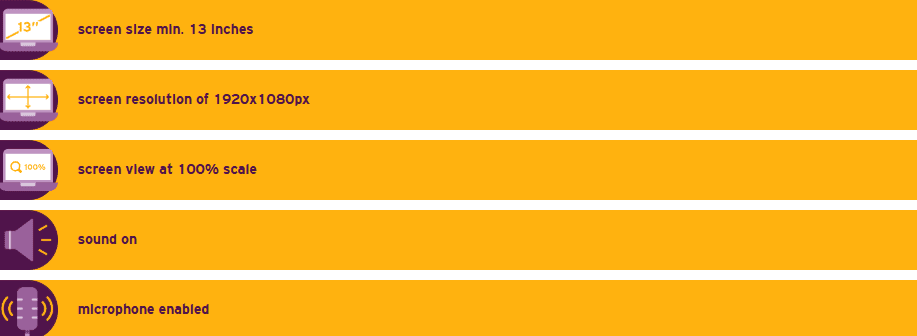
To view these example tasks, please ensure that you have the following technical set-up:
Below you will find useful information relating to the exam
You can edit text on your website by double clicking on a text box on your website. Alternatively, when you select a text box a settings menu will appear. your website by double clicking on a text box on your website. Alternatively, when you select a text box
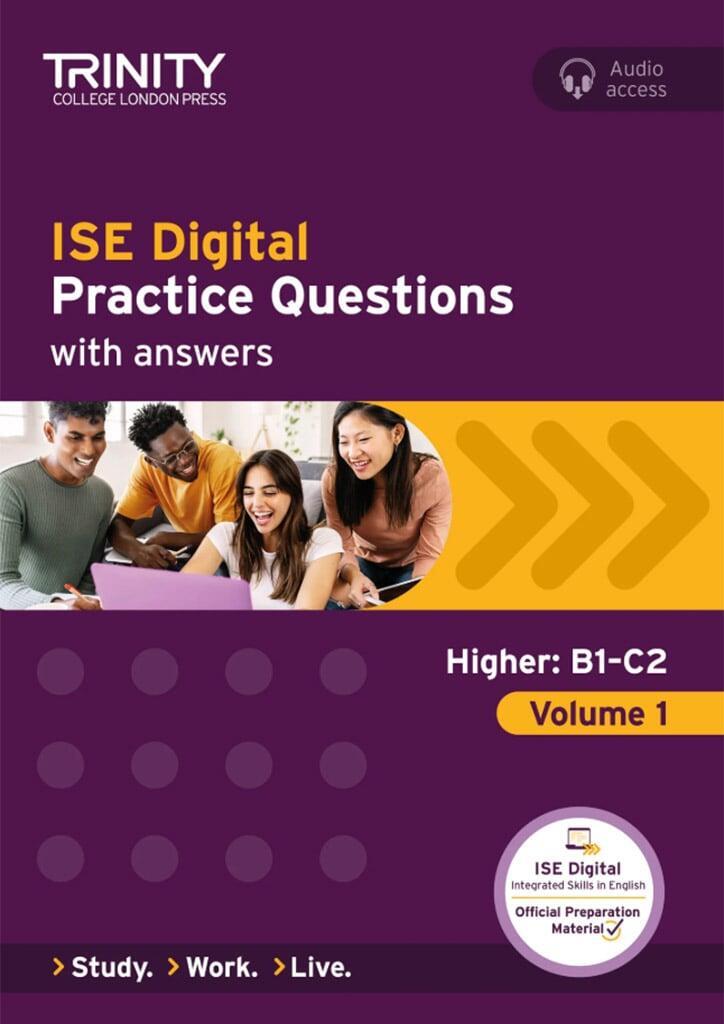
ISE Digital Practice Questions, Higher: B1–C2, Volume 1 — ebook
Please note: this is a digital product - you will not receive physical goods.
This digital book contains over 200 practice test questions and answers from 12 task types across all four modules (speaking, listening, reading and writing) of ISE Digital. The questions in this book are designed in the same way as those used in the actual ISE Digital exam, with these questions being adapted from computer use, to use in a resource book. This gives you time to study the questions and answers and makes them the ideal preparation material to help you achieve your best in the ISE Digital exam.
This book is a ‘higher-level’ book with questions and sample answers ranging from CEFR levels B1-C1, and is therefore appropriate study material for those who need to demonstrate an overall language level of CEFR levels B1 (Intermediate), B2 (Upper-intermediate), C1 (Advanced) and C2 (Proficiency).
This digital book can be downloaded as a PDF and printed locally, or used entirely digitally. Audio material for the Speaking and Listening questions is downloadable as MP3 files.
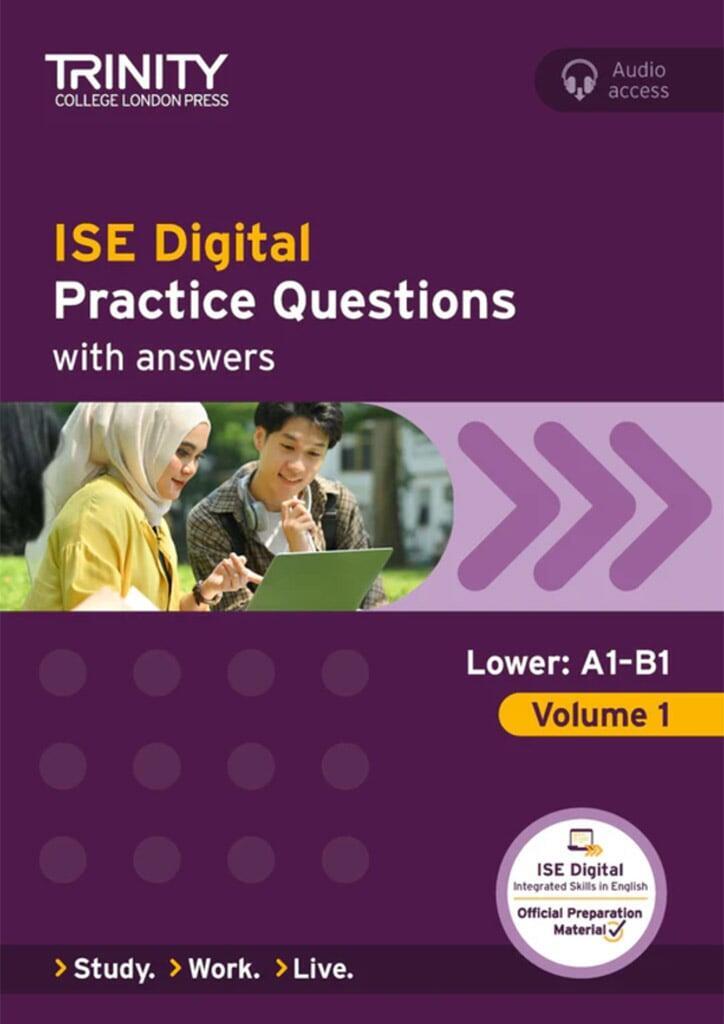
ISE Digital Practice Questions, Lower: A1–B1, Volume 1 — ebook
Please note: this is a digital product - you will not receive physical goods.
This digital book contains over 200 practice test questions and answers from 12 task types across all four modules (speaking, listening, reading and writing) of ISE Digital. The questions in this book are designed in exactly the same way as those used in the actual ISE Digital exam, with these questions being adapted from computer use, to use in a resource book. This gives you time to study the questions and answers and makes them the ideal preparation material to help you achieve your best in the ISE Digital exam.
This book is a ‘lower-level’ book with questions and sample answers ranging from CEFR levels A1-B1, and is therefore appropriate study material for those who need to demonstrate an overall language level of CEFR levels A1 (Elementary), A2 (Pre-intermediate) and B1 (Intermediate).
This digital book can be downloaded as a PDF and printed locally, or used entirely digitally. Audio material for the Speaking and Listening questions is downloadable as MP3 files.
This digital book contains over 200 practice test questions and answers from 12 task types across all four modules (speaking, listening, reading and writing) of ISE Digital. The questions in this book are designed in exactly the same way as those used in the actual ISE Digital exam, with these questions being adapted from computer use, to use in a resource book. This gives you time to study the questions and answers and makes them the ideal preparation material to help you achieve your best in the ISE Digital exam.
This book is a ‘lower-level’ book with questions and sample answers ranging from CEFR levels A1-B1, and is therefore appropriate study material for those who need to demonstrate an overall language level of CEFR levels A1 (Elementary), A2 (Pre-intermediate) and B1 (Intermediate).
This digital book can be downloaded as a PDF and printed locally, or used entirely digitally. Audio material for the Speaking and Listening questions is downloadable as MP3 files.
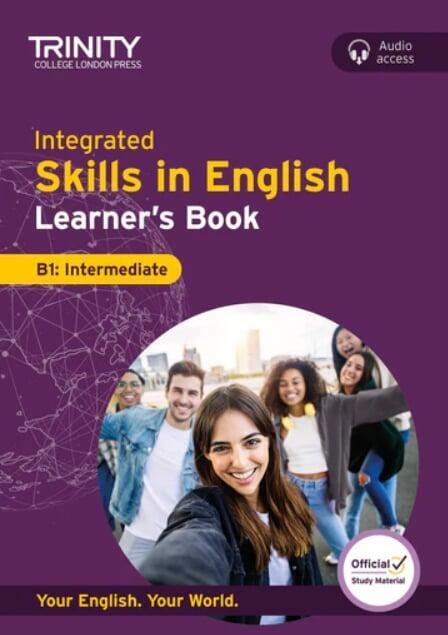
Integrated Skills in English, Learner's Book, B1: Intermediate — ebook
Please note: this is a digital product - you will not receive physical goods.
Trinity's Integrated Skills in English books are designed to help you develop the four key English language skills: listening, speaking, reading and writing. Over the 40 units of this book, grouped into eight themed modules, you will develop skills and strategies to meet CEFR-based learning outcomes. At the same time, you will build your knowledge of topic-focused vocabulary and a range of grammatical structures.
Written by eight authors from around the globe, the themes and characters within these B1-level modules reflect the real and rich diversity of our multicultural world. This book includes downloadable audio tracks, including conversations, podcasts and meetings, modern text types and communicative tasks to develop your real-world English.
The Integrated Skills in English series has been designed specifically to support your skills attainment and ensure your progress, whether you want to develop authentic English for everyday communication or you’re studying for a Trinity College London skills-based exam.
ISE Digital - Understanding the Writing module rating scale
- Understanding the Writing from sources scale [PDF]
- Understanding the Written online communication scale [PDF]
ISE Digital - Understanding the Speaking module rating scale
ISE Digital|Student
ISE Digital is a computer-delivered exam that assesses English language speaking, listening, reading and writing skills. It covers all six levels of the CEFR and provides evidence of English proficiency for academic study, employment and visa purposes.
Why should I take ISE Digital?

Convenient
ISE Digital provides flexible and frequent exam dates. Most results will be available within 3-5 days, with a digital certificate that you can easily share with universities or employers. You can also choose to resit one module if you want to improve your score.

Tailored to you
The modules in ISE Digital are adaptive, which means that the questions will be adjusted to your level of English. In the Speaking module, you can choose the topic of conversation and talk about something that really matters to you. You will receive detailed feedback that shows your strengths and areas for improvement.

Builds real-life skills
The tasks in ISE Digital are designed to reflect the language skills that you need to build the life you want. You will encounter authentic texts, conversations, discussions and scenarios, preparing you for work, study and life in an English-speaking environment.

Guarantees a result
ISE Digital is an adaptive, multi-level exam covering CEFR levels A1 to C2. This means that every candidate receives a score and a certificate.

Trusted
ISE Digital is offered by Trinity College London, a trusted international awarding organisation. Trinity College London is regulated by Ofqual, Qualifications Wales and CCEA Regulation in Northern Ireland.

Speaking

Listening

Reading

Writing
Trinity offers a range of practice materials to help you prepare for ISE Digital. Click the link below for more information about the exam, including videos and example tasks. These will help you understand the types of tasks and questions in the exam.
Getting ready for ISE Digital: a how-to guide for students
Recognition
Recognised around the world
Trinity's Integrated Skills in English (ISE) qualifications and Graded Examinations in Spoken English (GESE) are recognised around the world as evidence of English language proficiency.
ISE and GESE exams are taken by hundreds of thousands of candidates worldwide each year and numbers are growing in China, Hong Kong SAR, India, UAE, Italy, Spain, Turkey, Mexico, and South America.
Visit ISE section for further information about the exams.
ISE: Evidence of English language skills for study
Trinity's ISE is a contemporary multi-skills qualification that evidences English language communication skills (reading, writing, speaking and listening) required by universities and promotes the development of other transferable skills for study.
Download the ISE Guide for Higher Education and Universities.
Why transferable skills are important
Listen to why Trinity's ISE is selected as a preferred option when it comes to authentic and transferable skills for real life.
Higher education institutions that accept ISE
ISE is widely accepted by high ranking institutions, including UCL, LSE and Kings College in London, Edinburgh University and elsewhere in Europe. As well as being accepted in the UK and Ireland, it is also recognised by a growing number of universities and colleges across North America and elsewhere.
ISE recognition enquiry
If you are unable to find the university or college where you wish to study listed on our web pages, please send Trinity College your details using this form, and they will enquire further on your behalf.
Join the list of institutions that recognise ISE
Increase your institution's profile among prospective students by joining the list of institutions that accept ISE certificates
Join the list to add or update your institution's listing.
UCAS
Guidance from the UK's University and Colleges Admissions Services (UCAS) advises international student applicants to check the language level requirements of individual universities before making applications.
UCAS does not specify acceptable levels of English language proficiency. However, typical requirements for university degree programmes in the UK are:
- ISE II (CEFR B2) - RQF Level 1/ EQF Level 2
- ISE III (CEFR C1) - RQF Level 2/ EQF Level 3
- ISE IV (CEFR C2) - RQF Level 3/ EQF Level 4
Government and regulatory
Trinity examinations are recognised by governments and ministries worldwide. For the latest updates on our agreements, please view our Global and government projects map.
UK Government Home Office - UKVI
Both ISE and GESE tests taken in Secure English Language Test (SELT) Centres in the UK are approved and accepted by the UK Visas and Immigration (UKVI) for settlement and multiple visa application purposes.

Find out more about SELT tests.
Ofqual (Office of Qualifications and Examinations Regulation)
Trinity College London is recognised by Ofqual and its regulated qualifications are regulated by Ofqual and its respective partners in Wales and Northern Ireland.
International framework alignment
Qualifications formally calibrated to the CEFR
The Common European Framework of Reference for Languages (CEFR) is an international standard for describing language ability. It is used around the world to describe learners' language skills. Trinity's ISE and GESE qualifications have been formally calibrated to the CEFR.
Read the report about our Calibration to the CEFR and find learner profiles describing the language skills candidates must demonstrate at each level to pass ISE at CEFR levels B2, C1 and C2.
The CEFR/ISE/TOEFL iBT/IELTS alignment chart shows how these qualifications map to the CEFR
Trinity ISE and GESE alignment to CEFR shows how ISE and GESE map to the CEFR
RQF and EQF frameworks
All of Trinity's regulated qualifications meet the requirements of the Regulated Qualifications Framework (RQF).
The European Qualifications Framework for Lifelong Learning (EQF) framework makes comparisons between qualifications in different EU countries easier to understand.
Visit the Trinity qualifications alignment - how ISE and GESE map to RQF and EQF frameworks
China’s Standards of English Language Ability (CSE)
GESE is aligned with the China's Standards of English Language Ability (CSE). Please find the report here.
Professional associations
ALTE
Trinity College London is a member of the Association of Language Testers in Europe (ALTE). In 2012 GESE and ISE were awarded the ALTE 'Q' Quality mark - evidence of meeting all 17 of ALTE’s stringent quality standards.
Trinity is an active member of leading professional institutions:
- Association of Language Testers in Europe (ALTE)
- Association of Educational Assessment – Europe
- English UK (EUK)
- Eaquals
- European Association for Language Testing and Assessment (EALTA)
- International Association of Teachers of English as a Foreign Language (IATEFL)
- International Language Testing Association (ILTA)
- Latin American Association for Language Testing and Assessment (LAALTA)
- National Association for Teaching English and other Community Languages to Adults (NATECLA)
- International Education Association of Australia (IEAA)
Find out more about Trinity's membership of professional associations